.avif)

.avif)
.avif)
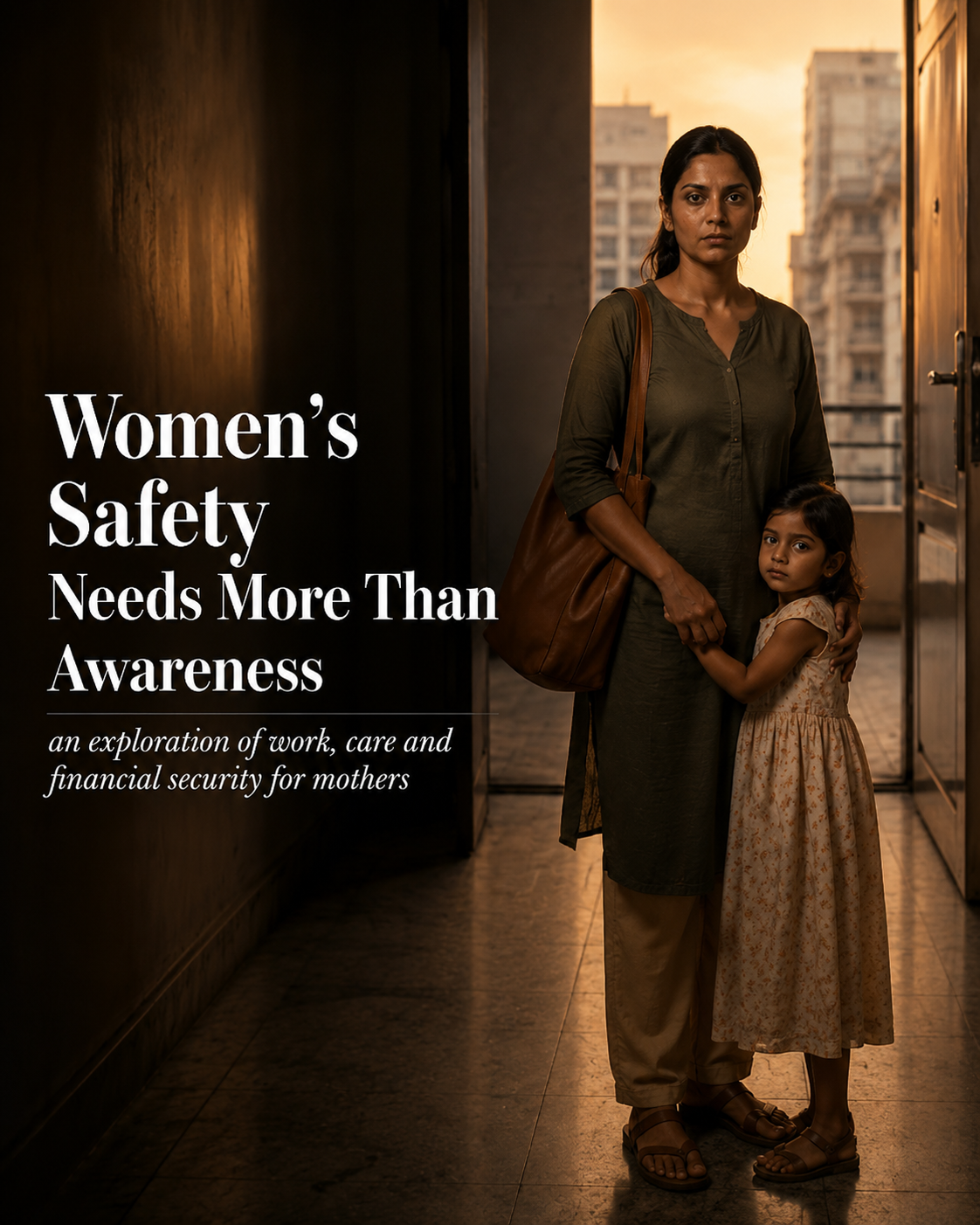
Eight women have now been killed violently in the Republic of Ireland this year. That is already more than the total for the whole of last year. Women's Aid Ireland has also reported the highest level of disclosures in its history: 62,275 disclosures of domestic abuse against women and children in 2025, a 33% increase on 2024.
These figures should horrify us, but horror is not enough. Ireland cannot keep responding to violence against women with grief, statements and campaigns while leaving the practical routes to safety too narrow, too slow, too expensive, too full, or not there at all.
The question now is whether we are willing to look honestly at the systems around women’s lives and ask whether we are actually giving women real choices.
Women’s safety needs more than awareness. It needs safe housing, refuge spaces, childcare, legal protection, income, social protection, employment supports and financial independence. It needs systems that understand that a woman may live in a household that appears to have income on paper, while having little or no access to money, savings, choice or safety in practice.
It also needs recognition that a mother who can work part-time, school hours or flexibly is not unavailable for work. She may simply be unavailable for work designed without care in mind. That distinction matters because when employment and social protection systems only recognise full-time availability, they risk making invisible the women who are trying to build income around children, care responsibilities, school hours, transport, trauma, safety planning and the realities of life.
The responsibility for abuse always lies with the abuser. Nothing about childcare, housing, poverty or employment policy causes a man to abuse a woman. But those systems can decide how many routes a woman has out. Right now, too many women are being told they deserve safety while the conditions needed to reach safety remain out of reach.
Staying Focused on Real Solutions
The National Women's Council (NWC) warned this week that we cannot allow violence against women to be turned into scapegoating or distraction. That matters, because if we are serious about women’s safety, the conversation has to stay focused on the real issues and the real solutions.
Those solutions do not sit in one department, one service or one campaign. They include prevention, refuge provision, housing, justice, legal protection, childcare, income, social protection, employment supports and financial independence. They require us to look at the whole environment around women’s lives, not only at the moment of crisis.
This is where awareness alone is not enough. Awareness can name the problem, and that is important, but it cannot create a refuge space, pay a deposit, make childcare available, put money in a woman’s own name, or ensure that she can access employment support when her realistic availability is part-time, school hours or flexible because of care.
There are organisations far better placed than Mums Hub to set out the full recommendations on domestic abuse, refuge provision, housing, justice, prevention and women’s rights. Women’s Aid, the National Women’s Council, Focus Ireland and many others have been doing that work for years, and their recommendations need to be heard, funded and acted on.
The part Mums Hub can speak to is the part we see every day: mothers who want to work, rebuild confidence, access training, earn in their own name and find care-compatible routes into employment, but who are too often made invisible by systems designed around full-time availability, household income and work without care.
We need awareness, but awareness has to lead somewhere. It has to lead to systems that make women safer in practice, and one of the places Mums Hub is asking policymakers to look is the employment and social protection system.
Household Income Is Not the Same as Personal Security
One of the gaps that urgently needs attention is the way household income is understood.
On paper, a household may appear to have income. In practice, that does not always mean the woman in that household has access to money, savings, transport, childcare, information, choice or safety. A partner’s income does not automatically create a woman’s financial independence, and it certainly does not guarantee that money is shared fairly, safely or freely.
This matters deeply when employment supports, welfare access or return-to-work pathways are assessed mainly through household income. A mother may be living in a household that appears financially stable, while personally having no income of her own, no savings, no pension contributions, no practical route back to work and very little control over money. In situations involving coercive control, domestic abuse or financial abuse, this can make her individual need almost invisible.
Financial abuse is recognised as part of domestic abuse, but the wider issue is not only financial abuse in its most obvious form. It is also the way financial dependency can build over years of unpaid care, childcare gaps, part-time work penalties, career breaks, lack of flexible jobs and systems that do not see the primary caregiver as an individual in her own right.
If a woman has no independent income, no realistic access to work, no childcare, nowhere affordable to live and no support pathway because the household looks fine on paper, then we have to ask a serious question: what choice does she actually have?
This does not mean every partnered mother is unsafe or financially controlled. It means our systems need safeguards for the women who are (and by the level of contacts to the support services, many are). It means recognising that household income and personal security are not the same thing. It means making sure that a mother can access information, employment guidance, training pathways and support in her own right, especially where care has limited her ability to earn, save, progress or leave.
Financial independence will not end violence against women. It will not replace refuge spaces, safe housing, legal protection, specialist domestic abuse services or prevention work. But lack of financial independence can make unsafe situations harder to leave.
And if Ireland is serious about women’s safety, then women’s access to income, employment support and care-compatible work cannot be treated as a side issue.
Recognising Mothers as Part-Time Jobseekers
One practical change Mums Hub is calling for is the recognition of mothers and primary caregivers as legitimate part-time, school-hour and flexible jobseekers.
This may sound like a technical employment-policy issue, but it is much more than that. It is about whether women can access employment guidance, Intreo support, training advice, return-to-work pathways and income-building opportunities in their own right, even when their realistic availability is shaped by care.
Many mothers are not unavailable for work. They are unavailable for work designed without care in mind.
A mother who can work 15 or 20 hours a week, school hours, term-time, remotely, hybrid or flexibly should not disappear from employment supports because she cannot take up full-time work immediately. Care-shaped availability should not be treated as a lack of willingness. It should be recognised as the real condition under which many mothers can begin, return to, or increase paid employment.
This matters because the current system can miss women who are actively trying to rebuild. A mother may have spent years outside paid employment because she was caring for children. She may have completed training or upskilling. She may be ready to work, but unable to access a full-time placement, a 30-hour programme, or work experience that ignores school runs, childcare availability and family life.
She may be willing, skilled and motivated, but still left outside the support route she needs.
When we fail to recognise part-time and flexible jobseekers, we do not only lose women’s talent. We make financial independence harder to build. We keep mothers dependent for longer than they need to be. We allow systems to describe women as unavailable, when the truth is that the work, training or support being offered is unavailable to them in any realistic form.
That is not a small administrative gap. It is a policy failure with real consequences.
What Mums Hub Is Recommending
From Mums Hub’s perspective, one practical part of the solution is to recognise mothers and primary caregivers seeking part-time, school-hour, term-time, remote, hybrid or flexible work as legitimate jobseekers.
This is not about lowering expectations for mothers or accepting poor-quality work. It is about recognising reality. A mother who can work part-time may be actively seeking employment. A mother who can work during school hours may be ready, skilled and motivated. A mother who needs flexibility may not be less committed; she may simply be trying to work within the real conditions of care.
There are five practical changes Mums Hub is recommending.
1. Recognise care-compatible jobseekers. Mothers and primary caregivers seeking part-time, school-hour, term-time, remote, hybrid or flexible work should be recognised as legitimate jobseekers where that availability reflects caring responsibilities and practical circumstances. Part-time and flexible work should not be treated as lesser participation. For many mothers, it is the practical route back into confidence, income, financial independence and progression.
2. Ensure employment supports can be accessed in their own right. Mothers should be able to access employment guidance, Intreo support, CV support, training advice, referrals and return-to-work pathways in their own right, including where they are not on a qualifying payment or where household income assessment hides individual need.
3. Review return-to-work pathways after unpaid care. A mother may have spent years outside paid employment raising children, may have completed training or upskilling, and may be ready to work, but still need a realistic bridge into experience. If the only available supports require full-time availability, 30-hour placements or qualifying payments she cannot access, then the pathway does not match the reality of her life.
4. Build safeguards where household income hides personal insecurity. Household income does not always mean personal access to income. Where a mother has little or no independent income, savings or control over money, she should not become invisible to employment supports, training pathways or financial independence simply because the household appears stable on paper.
5. Apply a care impact test to employment policy. Before we design a payment, placement, activation measure or employment support, we should ask whether it works in real life for mothers and primary caregivers. Does it account for childcare availability and cost, school hours, afterschool gaps, transport, children’s additional needs, safety, confidence and whether suitable flexible jobs actually exist?
If the answer is no, then the support may exist on paper while still being out of reach in practice. A pathway that cannot be used in real life is not a pathway. It is a document.
Women need routes they can actually use.
Women Need Routes, Not Rhetoric
Ireland does not have the luxury of waiting any longer.
With such a sharp increase in disclosures of domestic abuse, with women continuing to be killed, and with services already warning that current systems are not enough, we cannot keep treating women’s safety as something that can be solved by awareness alone.
Awareness matters. Language matters. Campaigns matter. But they are not enough if a woman still has nowhere to go, no refuge space, no childcare, no income in her own name, no affordable housing, no realistic access to work and no employment support because the system cannot see her individual need.
The law, housing system, social protection system, childcare system and employment system cannot keep sitting in separate boxes, because women’s lives are not separate boxes. A mother trying to leave, rebuild, work, care, protect her children and survive does not experience these systems one at a time. She experiences them all together.
Organisations such as the National Women’s Council have already made the housing point clearly: too often, women and children are forced into the impossible space between abuse and homelessness. Where it is safe and legally possible, the burden should not fall on women and children to lose their home, their community, their school routine and their stability in order to escape violence. The perpetrator should be the one removed, not the woman and children forced to start again with nothing.
That is the level of seriousness this moment demands.
This is not about pretending employment support alone will solve domestic abuse. It will not. Care-compatible work will not replace refuge spaces, safe housing, legal protection, specialist domestic abuse services or prevention work. But without care-compatible routes into work, too many mothers remain blocked from building income, confidence and independence.
Financial independence will not end violence against women. But lack of financial independence can make unsafe situations harder to leave.
If Ireland is serious about women’s safety, then we need to stop asking women to be brave inside systems that have not been built to catch them. We need routes to safety, routes to housing, routes to childcare, routes to income, routes to employment support, and routes back into work that recognise the reality of care.
Not only sympathy.
Not only awareness.
Routes that are real, practical and possible to use.
Update: A Practical Solution from Mums Hub’s Lane
Adding this because it connects directly to the proposal in this article.
The Taoiseach has said that if good solutions to violence against women are put on the table, funding will not be an issue.
Here is one practical solution from Mums Hub’s lane.
Recognise mothers and primary caregivers as legitimate part-time, school-hour and flexible jobseekers.
Make sure women can access employment guidance, Intreo support, training pathways and return-to-work supports in their own right, including where household income does not reflect personal access to money, choice or safety.
Apply a care impact test to employment and social protection policy, so supports are not designed around full-time availability while ignoring childcare, school hours, transport, unpaid care and mothers’ lives.
This will not replace refuge spaces, safe housing, legal protection, specialist domestic abuse services or prevention work.
But it is one practical route towards financial independence.
And financial independence is part of women’s safety.
Micheál Martin, if good solutions are being invited onto the table, Mums Hub would welcome the opportunity to discuss this further.
RTE report: https://www.rte.ie/news/ireland/2026/0709/1582589-gender-based-violence/


